 English
  cn
cn  de
de  es
es  fr
fr 
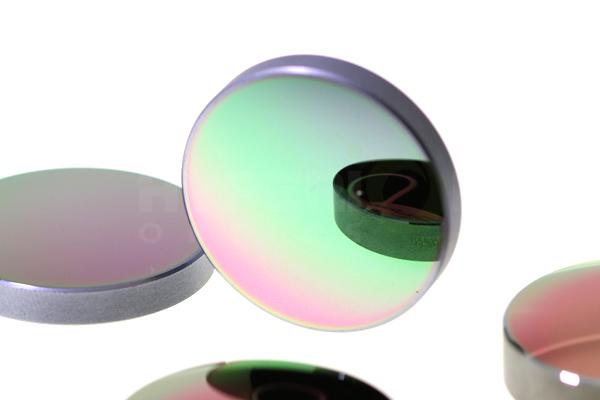
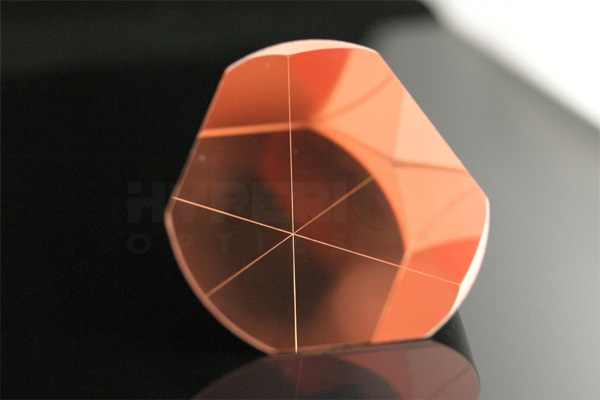
Hyperion Optics utilizes optical-grade silicon, which is specified with a resistivity of 10-40 Ohm-cm, higher than most semiconductor applications. CZ grade silicon (Czochralski method) has an absorption band at 9μm, which is acceptable if the application is used range of 3 to 5μm thermal band. On the other hand, float zone silicon does not have this absorption property. Please verify your application's working wavelength when inquiring with Hyperion Optics.
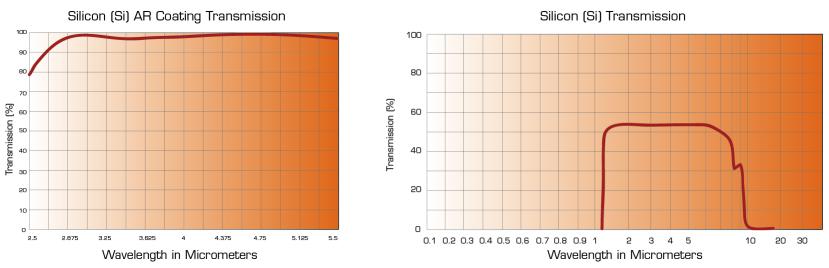
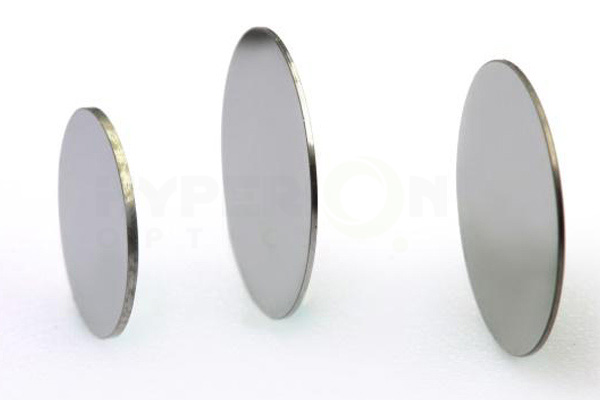
Silicon lenses are normally used in the 2-7µm range, ideal for IR LED applications, with high thermal conductivity and low weight considered critical features in both IR and FTIR systems with a refractive index of 3.4 throughout the range. Silicon windows can be used as a high reflectivity mirror for lasers and IR viewports. Please refer to our Silicon Windows for more information.
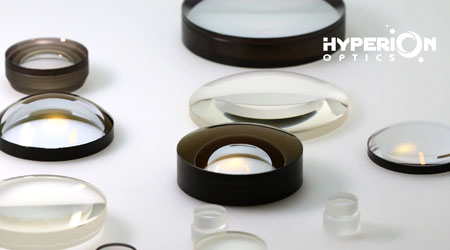
We are capable of manufacturing 3-300mm in diameter silicon lenses for collimating or focusing applications, with AR coating or DLC coating. Coating simulation can be provided upon request, along with your inquiry feedback.
Silicon Lenses | COMMERCIAL GRADE | FACTORY STANDARD | PRECISION GRADE |
Diameter Tolerance(mm) | +0/-0.20 | +0/-0.10 | +0/-0.10 |
Center Thickness(mm) | ±0.20 | ±0.15 | ±0.10 |
Radius (%) | ±2% | ±1.5% | ±1% |
Focal Length Tolerance (%) | <2% | <1% | <0.5% |
Cosmetic(MIL-C-13830A) | 80-50 | 60-40 | 40-20 |
Figure Tolerance in λ(Pow/irreg) | 5 - 2 | 2 - 1/2 | 1 - 1/4 |
Centration (Arc min) | 5' | 3' | 1' |
Dia. To Thick Ratio | 9~35:1 | ||
Coating (R% avg) | <1.5%@3-5um | ||
Materials | Optical Grade Silicon | ||




 Call us on:
  Email us:
  9B-4F, No.1 Qingnian Road Liando U Valley,Yuhua International Wisdom Valley, Nanjing, 210039 China