 English
  cn
cn  de
de  es
es  fr
fr 
The success of a precision optical system often depends on how accurately it can control light before it reaches the detector, target, or imaging surface. In many advanced applications, uniform illumination, controlled beam expansion, and directional focusing are essential requirements that cannot be achieved efficiently with standard optical elements alone.
By introducing optical power along only one axis, cylindrical lenses provide a unique method for manipulating light distribution and improving system performance. This makes cylindrical lens optics an important solution in applications such as laser beam shaping, machine vision illumination, optical inspection, and specialized imaging systems where directional control is critical.
However, achieving reliable performance from cylindrical lens optics requires careful optimization of multiple factors rather than relying on lens geometry alone. Focal length selection, surface precision, optical material properties, and coating technologies all influence the final optical results. With expertise in optical design and precision manufacturing, Hypoptics develops customized cylindrical lens solutions to support demanding applications across different industries.
The performance of cylindrical lens optics begins with the relationship between lens geometry and light behavior. Unlike spherical lenses, which focus incoming light equally in two dimensions, cylindrical lenses introduce curvature in only one direction. This allows them to control light along a specific axis while maintaining different optical behavior on the perpendicular axis.
This unique characteristic makes cylindrical lenses suitable for applications where traditional lenses cannot provide sufficient control. For example, a laser beam that needs to be expanded in one direction or transformed into a line pattern requires directional optical adjustment rather than symmetrical focusing.
A carefully optimized cylindrical lens design considers factors such as curvature radius, aperture size, focal characteristics, and alignment requirements. These elements determine how accurately the lens can reshape light and maintain consistent optical performance.
The principle behind cylindrical optics also appears in vision correction applications. A cylindrical lens for eyes uses different optical power along different axes to compensate for irregular curvature in the eye and correct astigmatism. Although ophthalmic lenses and industrial cylindrical optics serve different purposes, both depend on precise control of optical power direction.
For industrial systems, the same concept allows engineers to create customized solutions for beam shaping, illumination control, and optical measurement. The effectiveness of the final system depends on how well the lens design matches the specific application requirements.
Among the most important parameters influencing cylindrical lens optics, focal length determines how strongly the lens modifies incoming light. A shorter focal length generally provides stronger optical transformation, while a longer focal length allows more gradual beam adjustment.
In laser and imaging applications, focal length selection directly affects beam size, working distance, and system configuration. Engineers must consider the relationship between the cylindrical lens and other optical components to achieve the desired result.
Magnification is another important factor when cylindrical lenses are integrated into imaging systems. Because cylindrical lenses influence light along only one axis, magnification may differ between horizontal and vertical directions. Proper optical alignment is therefore essential to avoid unwanted image distortion or uneven scaling.
| Optical Parameter | Impact on Cylindrical Lens Performance | Typical Design Consideration |
|---|---|---|
| Focal length | Controls focusing strength and beam transformation | Selected according to working distance and optical objectives |
| Surface accuracy | Affects image quality and light distribution consistency | Important for precision imaging and laser applications |
| Material properties | Influence transmission, durability, and stability | Matched with wavelength and environmental requirements |
| Coating performance | Improves transmission efficiency and reduces reflections | Selected according to application conditions |
| Axis alignment | Determines directional optical accuracy | Critical for beam shaping and imaging integration |
A successful cylindrical lens design balances these parameters rather than optimizing a single specification. This approach ensures that the lens performs reliably within a complete optical system.
Surface quality is one of the most important factors affecting the performance of precision optical components. Even a well-calculated lens design may fail to deliver expected results if manufacturing imperfections affect the optical surface.
For cylindrical lens optics, surface accuracy is especially important because these lenses are often used to create controlled illumination patterns or precise beam profiles. Surface irregularities can introduce unwanted scattering, reduce image clarity, and affect the uniformity of transmitted light.
In machine vision applications, poor surface quality may reduce inspection accuracy by creating uneven illumination or inconsistent image information. In laser systems, it may influence beam shaping performance and reduce processing reliability.
Precision manufacturing processes, including accurate polishing and surface inspection, help ensure that cylindrical lenses maintain their designed optical characteristics. By controlling manufacturing quality, optical suppliers can provide components that perform consistently in demanding environments.
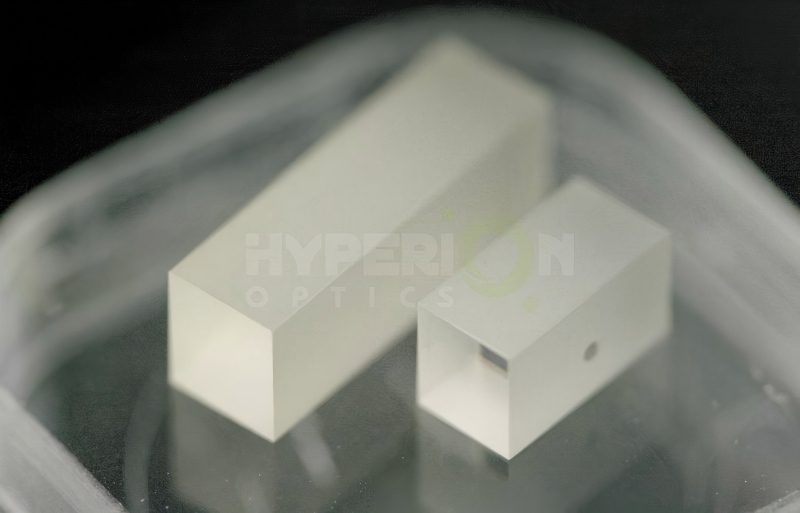
The optical material selected for a cylindrical lens has a direct influence on transmission performance, environmental stability, and long-term reliability. Different applications require different material characteristics depending on wavelength range, operating temperature, and mechanical requirements.
When developing cylindrical lens optics, engineers evaluate material properties carefully to ensure that the lens maintains stable performance throughout operation. For laser applications, material transmission at the operating wavelength is an important consideration. For imaging applications, optical clarity and dimensional stability may have greater importance.
Material selection also plays an important role in ophthalmic applications. A cylindrical lens for eyes requires materials that provide optical clarity, comfort, and reliable correction performance. Although the application differs from industrial optics, both fields demonstrate how material characteristics influence optical effectiveness.
By combining suitable materials with precise optical design, manufacturers can develop cylindrical lenses that provide reliable performance across different environments.
Optical coatings significantly influence the efficiency of cylindrical lens optics by improving light transmission and reducing unwanted reflections. When light passes through multiple optical surfaces, reflection losses can reduce system efficiency and affect image or beam quality.
Anti-reflection coatings help minimize these losses by allowing more light to pass through the lens. This is particularly valuable in applications where optical efficiency is critical, such as laser systems, precision imaging, and measurement equipment.
The selection of coating technology depends on factors such as operating wavelength, environmental conditions, and performance requirements. A properly matched coating can improve contrast, reduce stray light, and enhance overall system reliability.
Hypoptics integrates optical design, material selection, surface processing, and coating technologies when developing customized solutions. Engineers can explore available optical solutions through Hypoptics’ optical components for different precision applications.
Selecting the right cylindrical lens requires more than comparing individual specifications. The lens must work effectively within the complete optical system, including the light source, sensor, mechanical structure, and operating environment.
In machine vision systems, cylindrical lens optics can be used to create structured illumination and improve image analysis accuracy. In laser applications, they help transform beam profiles for specific processing requirements. In optical measurement systems, they support controlled projection and precise light distribution.
The best optical solution depends on factors such as required beam shape, working distance, wavelength, and integration limitations. A well-designed cylindrical lens can improve system efficiency by providing accurate optical control without unnecessary complexity.
Hypoptics works with engineers and system developers to evaluate application requirements and create customized optical solutions. Companies looking for professional guidance on cylindrical lens selection and integration can connect with the Hypoptics team through its optical consultation service.
The performance of cylindrical lens optics is determined by the interaction between optical design, focal characteristics, surface quality, material selection, coatings, and system integration. Unlike traditional spherical lenses, cylindrical optics provide directional control of light, making them essential for applications that require precise beam shaping and specialized imaging performance.
From industrial imaging and laser processing to applications involving a cylindrical lens for eyes, accurate control of optical power along different axes remains the foundation of reliable performance. Through advanced optical engineering and precision manufacturing, Hypoptics supports customers in developing customized cylindrical lens solutions for demanding applications.
Cylindrical lens optics are commonly used for beam shaping, line generation, structured illumination, optical measurement, and specialized imaging systems.
A cylindrical lens controls light along one axis, while a spherical lens focuses light equally across two dimensions.
Important parameters include focal length, surface accuracy, optical material, coatings, and alignment within the optical system.
A cylindrical lens for eyes is mainly used to correct astigmatism by compensating for uneven optical power in different directions.
Optical coatings improve light transmission, reduce reflections, and help maintain better optical efficiency.
Yes. Cylindrical lenses can be customized based on focal length, material, coating requirements, wavelength, and application needs.




 Call us on:
  Email us:
  9B-4F, No.1 Qingnian Road Liando U Valley,Yuhua International Wisdom Valley, Nanjing, 210039 China