 English
  cn
cn  de
de  es
es  fr
fr 
Visible imaging has transformed the way industries observe and analyze the world, but it still has limitations when critical information exists outside the range of human vision. Many materials, structures, and processes contain valuable characteristics that cannot be clearly identified through traditional cameras. This is where short-wave infrared technology creates new possibilities. By capturing infrared wavelengths beyond visible light, SWIR optics enable imaging systems to uncover hidden details with greater accuracy and reliability.
At the center of these advanced imaging systems are precision optical components, including the SWIR lens and SWIR filter. A high-performance SWIR lens ensures efficient light collection and accurate focusing, while a carefully designed SWIR filter controls wavelength selection to improve contrast and spectral analysis. Together, these optical technologies allow industries to achieve deeper visibility in applications ranging from semiconductor inspection to scientific research.
As a professional optical technology provider, Hypoptics develops precision optical solutions for advanced imaging applications, helping engineers and researchers improve the performance of infrared optical systems through optimized optical design and component integration.
The visible spectrum that humans can observe typically covers wavelengths from approximately 400 to 700 nanometers. SWIR, or short-wave infrared, generally refers to infrared wavelengths from about 900 nanometers to 2.5 micrometers. Although these wavelengths cannot be seen directly, they contain important information about material properties, chemical composition, moisture distribution, and structural differences.
Unlike visible light, SWIR radiation interacts with materials in unique ways. Some objects that appear identical under normal lighting conditions can show completely different characteristics when viewed through SWIR imaging. This difference is caused by variations in absorption and reflection behavior across infrared wavelengths.
For example, agricultural products may reveal differences in moisture content, while industrial materials may display hidden defects or composition variations. These capabilities make SWIR imaging particularly valuable in situations where conventional optical inspection cannot provide enough information.
A complete SWIR imaging solution requires precise coordination between the light source, optical components, detector, and processing system. The SWIR lens collects infrared signals and transfers them efficiently to the sensor, while the SWIR filter removes unwanted wavelengths and improves the quality of captured information.
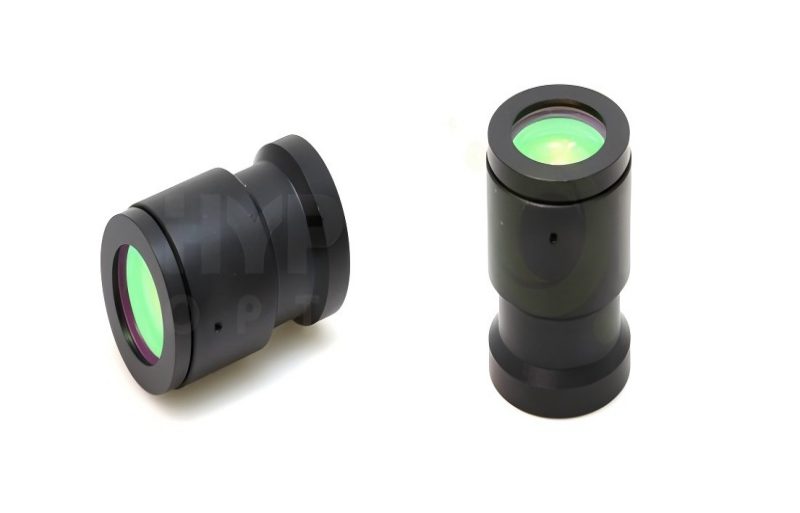
Designing a reliable SWIR lens requires specialized optical engineering because infrared wavelengths behave differently from visible wavelengths. Traditional camera lenses are mainly optimized for visible light and may not provide sufficient transmission or focusing accuracy in the SWIR range.
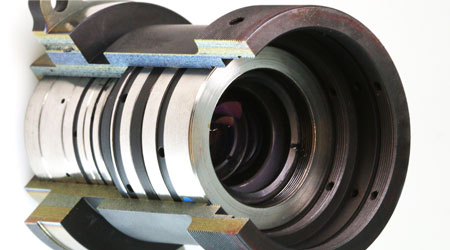
One of the primary challenges in SWIR lens design is maintaining image sharpness across different wavelengths. Optical materials naturally introduce wavelength-dependent focusing differences, which can reduce image clarity if not properly controlled. Advanced optical designs compensate for these variations through careful material selection, lens configuration optimization, and precision manufacturing.
A high-quality SWIR lens must also consider factors such as optical transmission efficiency, distortion control, field of view, working distance, and compatibility with infrared detectors. These characteristics directly influence whether an imaging system can achieve reliable inspection results.
For industrial and scientific applications, optical performance depends not only on the lens itself but also on how different components work together. Hypoptics supports advanced imaging requirements by providing precision optical components that are designed for demanding applications where accuracy, stability, and wavelength performance are essential.
While a SWIR lens determines how infrared light is collected and focused, the SWIR filter determines which wavelengths are allowed to reach the detector. This makes the filter a critical element in controlling image quality and extracting meaningful spectral information.
A properly engineered SWIR filter can isolate specific wavelength regions, reduce unwanted background signals, and improve contrast between different materials. Depending on the application, filters may be designed for broadband transmission, narrow wavelength selection, or specialized spectral analysis.
In industrial inspection, for example, a specific SWIR wavelength may highlight defects that are invisible under normal illumination. In scientific applications, precise wavelength control helps researchers analyze material characteristics more accurately.
The performance of a SWIR filter depends on several factors, including transmission efficiency, wavelength accuracy, optical coating quality, surface flatness, and environmental durability. Even minor variations in filter performance can influence measurement reliability in precision imaging systems.
| Comparison Factor | SWIR Lens | SWIR Filter |
|---|---|---|
| Main Purpose | Collects and focuses short-wave infrared light onto the detector | Selects required wavelengths and blocks unwanted infrared signals |
| Primary Performance Focus | Resolution, transmission, distortion control, and focusing accuracy | Spectral accuracy, wavelength selection, and signal improvement |
| Key Design Elements | Optical materials, lens structure, coatings, and alignment | Substrate materials, coating technology, and spectral characteristics |
| Impact on Imaging | Determines image sharpness and optical quality | Improves contrast and enhances spectral information |
| Typical Applications | Machine vision, infrared cameras, industrial inspection | Spectral imaging, material analysis, scientific detection |
A SWIR imaging system transforms invisible infrared signals into useful visual data through a carefully controlled optical process. The process begins when SWIR illumination interacts with an object and creates reflected or transmitted infrared signals.
These signals are collected by the SWIR lens, which directs the incoming light toward the detector. Before reaching the sensor, the light may pass through a SWIR filter that removes unnecessary wavelengths and improves the accuracy of the captured information.
The infrared detector then converts optical signals into electronic data. Advanced image processing algorithms analyze these signals and generate images that reveal differences invisible to conventional cameras.
This combination of optical engineering and digital processing enables SWIR systems to detect hidden patterns, identify material differences, and support automated decision-making in complex environments.
The performance of any infrared imaging system depends heavily on the materials used in its optical components. Unlike visible-light optics, SWIR optics require materials with suitable infrared transmission characteristics to ensure that valuable signals can pass through efficiently. The selection of optical materials directly affects image brightness, resolution, wavelength performance, and long-term reliability.
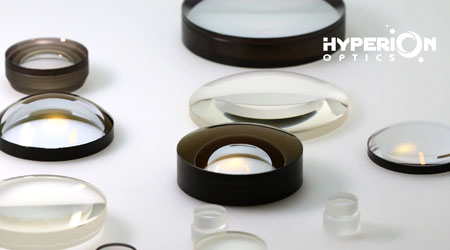
A high-quality SWIR lens typically uses specialized infrared-transmitting materials that maintain good optical performance within the short-wave infrared range. Materials such as silicon, fused silica, and other infrared-compatible optical glasses are selected based on factors including transmission range, mechanical stability, thermal characteristics, and application requirements.
For example, silicon provides strong transmission performance in specific SWIR wavelengths and offers excellent durability for industrial imaging environments. Fused silica is valued for its stability and reliable optical properties in applications requiring high precision. The correct material choice allows a SWIR lens to deliver consistent focusing performance while minimizing optical losses.
Material selection is equally important for a SWIR filter. The filter substrate and coating structure determine how accurately specific wavelengths can be transmitted or blocked. Advanced coating technologies enable a SWIR filter to achieve precise spectral control while maintaining durability under different environmental conditions.
In demanding applications, optical engineers must consider the complete operating environment, including temperature changes, mechanical stress, illumination conditions, and detector compatibility. A well-designed SWIR optical system requires every element, from the lens material to the filter coating, to work together as a unified solution.
The value of SWIR imaging extends far beyond simply capturing images. By revealing information hidden from visible cameras, SWIR technology supports more accurate analysis, automated inspection, and intelligent decision-making across multiple industries.
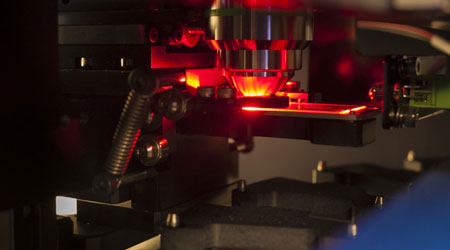
In semiconductor and electronics manufacturing, SWIR imaging helps identify defects, inspect internal structures, and analyze materials that are difficult to evaluate using visible light. The ability of SWIR wavelengths to penetrate certain materials provides manufacturers with additional inspection capabilities for improving product reliability.
In agriculture and food inspection, SWIR systems provide valuable information about moisture levels, chemical composition, and product quality. Because different materials interact with infrared wavelengths differently, a combination of a precise SWIR lens and an optimized SWIR filter can help imaging systems distinguish subtle variations that are invisible to traditional cameras.
Material sorting and recycling are also benefiting from SWIR technology. Automated sorting systems use spectral differences to identify plastics, metals, and other materials more efficiently. This improves classification accuracy and supports more sustainable industrial processes.
Scientific research, pharmaceutical analysis, security monitoring, and machine vision are other areas where SWIR optics continue to create new opportunities. As industries demand more detailed and reliable information, the importance of advanced infrared optical components continues to increase.
The effectiveness of these systems depends on selecting optical components that match specific application requirements. From wavelength selection to imaging performance, engineers often need professional optical guidance when developing advanced solutions. Hypoptics works with customers to evaluate optical requirements and provide suitable solutions through professional optical consultation and project support.
SWIR optics have changed the way industries observe and analyze the world by extending imaging capabilities beyond visible light. Through advanced optical engineering, these systems can reveal hidden details related to material properties, structural differences, and environmental conditions.
The combination of a high-performance SWIR lens and a precisely engineered SWIR filter creates the foundation for reliable short-wave infrared imaging. While the lens ensures accurate light collection and image formation, the filter provides essential wavelength control that improves contrast and spectral accuracy.
As applications continue to expand in industrial inspection, scientific research, agriculture, and intelligent automation, SWIR technology will play an increasingly important role in precision imaging. With continuous improvements in optical materials, coating technologies, and system integration, advanced SWIR solutions will continue helping industries discover information that was previously invisible.
SWIR imaging is an infrared imaging technology that captures short-wave infrared wavelengths, typically from about 900 nanometers to 2.5 micrometers, to reveal information that cannot be detected through visible imaging.
A SWIR lens collects and focuses short-wave infrared light onto an infrared detector, ensuring accurate image formation and efficient signal transmission.
A SWIR filter controls the wavelength range reaching the detector, helping remove unwanted signals and improving image contrast and spectral analysis accuracy.
SWIR optics are widely used in semiconductor inspection, agriculture, food analysis, recycling, scientific research, security systems, and industrial machine vision.
Common SWIR lens materials include silicon, fused silica, and specialized infrared optical materials selected for their transmission performance and stability.
Most standard visible-light lenses are not optimized for SWIR wavelengths. A dedicated SWIR lens is designed to provide better infrared transmission, focusing accuracy, and image quality.




 Call us on:
  Email us:
  9B-4F, No.1 Qingnian Road Liando U Valley,Yuhua International Wisdom Valley, Nanjing, 210039 China