 English
  cn
cn  de
de  es
es  fr
fr 
SWIR Lenses refers to the wavelength range between 900nm and 2500nm, which is invisible to the naked eye.Light is an electromagnetic wave. SWIR lenses is located in the non-visible light spectrum between the near infrared (NIR) and long-wave infrared (IR), (about 0.9-1.7um) and its action is similar to photons in the visible range; It is more like visible light rather than thermal energy in the infrared spectrum. Although the SWIR wavelength is relatively short, photons in this range are less susceptible to Rayleigh scattering caused by particles with smaller diameters because their wavelengths are relatively long, which means that SWIR light can pass through smoke, fog or haze.
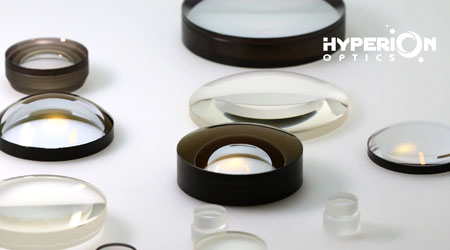
The photoelectric signal is converted by the chip, and finally a grayscale image of the object is formed. The shortwave infrared lens is similar to the visible light lens, mainly composed of optical glass lens, but the SWIR Lenses group must be specially designed, optimized and prepared according to the SWIR wavelength. The anti-reflection coating (antireflection coating) is usually required in the 700-1900nm band with the transmittance rate over 75%, and in the 900-1700nm band, the transmittance rate is over 80%; if a lens group designed for visible light is used for SWIR imaging, it will result in low image resolution (a significant decrease in resolution) and high optical aberration (optical aberration becomes larger). The lens group and other optical elements (filters ,windows, etc.) of the SWIR Lenses can use the same manufacturing technique as the optical element of the visible light lens so that the manufacturing cost can be reduced.







 Call us on:
  Email us:
  9B-4F, No.1 Qingnian Road Liando U Valley,Yuhua International Wisdom Valley, Nanjing, 210039 China