 English
  cn
cn  de
de  es
es  fr
fr 
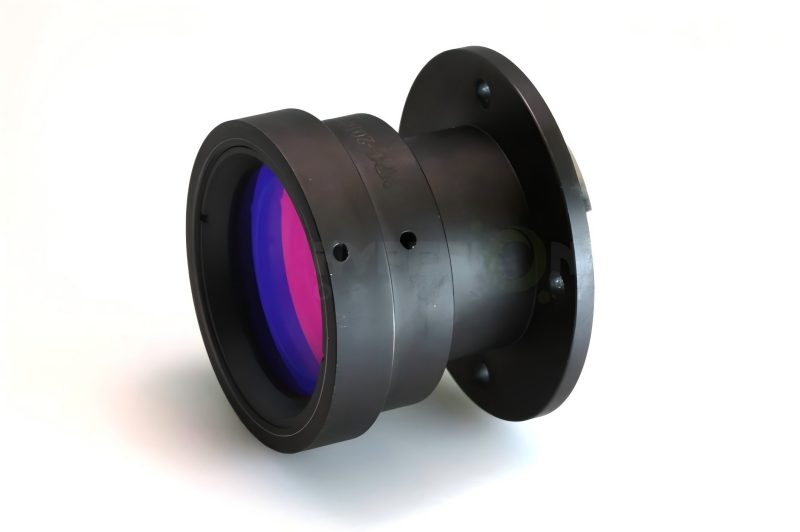
A collimator lens is designed for a point light source. In daily life, point light sources can include lit matches, the light bulb in old-fashioned flashlights, and lasers emitted from fiber optic cables. In the industrial laser industry, collimator lenses are primarily used for lasers emitted from energy transfer fiber optic cables. Collimator lenses used in CO2 lasers and infrared optical systems are used in beam transmission systems to maintain the collimation of the laser beam between the laser resonator and the focusing optical elements. Reflective collimator lenses generally use copper mirrors, while transmissive collimator lenses use zinc selenide lenses.
A laser beam expander can change the diameter and divergence angle of a laser beam. Divergence refers to the expansion of the light wave at a certain angle during its spatial propagation. Even perfectly normal rays of light will experience some divergence due to diffraction effects. The far-field divergence of a beam defines the best collimation effect for a given beam diameter. It also indicates that the zero divergence angle or the best collimation of the beam is impossible to achieve because it would require an infinitely large beam diameter.
Beam expanders have two main purposes: expanding the diameter of a laser beam and reducing the divergence angle of a laser beam. Both laser beam expanders and collimator lenses can improve the focusing effect of lasers and perform collimation. They have similarities and differences. Therefore, beam expanders are used for long-distance illumination or projection, as well as focusing systems. The divergence angle of a expanded beam is inversely proportional to the beam expansion ratio compared to an unexpanded beam. A beam that has been expanded can be focused to a smaller size compared to an unexpanded beam. The magnification of a laser beam in a beam expander is the enlargement ratio of the beam diameter. The product of the spot size and the divergence angle of a laser beam output from a laser beam expander is an optical invariant, which is approximately constant. When the beam waist radius is enlarged by a factor of x, the divergence angle is compressed to 1/x. The compression of the divergence angle is effectively collimation of the laser. However, compressing the divergence angle does not improve the beam quality. The beam quality is the product of the beam waist radius and the divergence angle. While compressing the divergence angle, the beam waist radius will increase, resulting in an increased spot size. In laser applications, collimator lenses are often used in conjunction with flat-field focusing lenses.




 Call us on:
  Email us:
  9B-4F, No.1 Qingnian Road Liando U Valley,Yuhua International Wisdom Valley, Nanjing, 210039 China