 English
  cn
cn  de
de  es
es  fr
fr 
In the rapidly evolving fields of optical communications, biomedical diagnostics, and infrared sensing, the ability to precisely control light transmission is paramount. Traditional optical systems often rely on stacking multiple bandpass filters to isolate specific wavelengths. However, this approach introduces challenges regarding assembly complexity, space constraints, and signal loss. Enter the multichannel filter—a sophisticated optical component designed to transmit two or more distinct bands of light simultaneously, revolutionizing modern optical architecture.
At Hyperion Optics, we leverage our deep expertise in thin-film coating and precision manufacturing to provide high-performance solutions for complex spectral requirements. By integrating multi-band filtering into a single component, our multichannel filter technology allows designers to create more compact, efficient, and cost-effective systems.
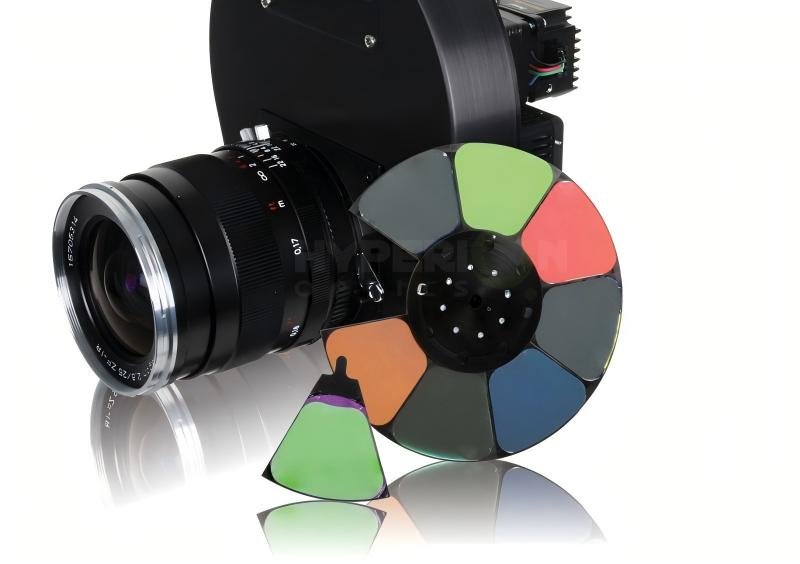
A multichannel filter deviates from standard bandpass designs by breaking the single-passband constraint. While traditional components typically isolate one continuous spectral region, this technology is engineered to permit multiple, discrete wavelength bands to pass through a singular substrate.
This is achieved through intricate thin-film interference. By meticulously managing the refractive index and thickness of each layer in the coating stack, we create precise transmission windows. Clients often explore the distinction between this technology and a prism lens filter; while a prism lens filter is frequently utilized for beam splitting or aesthetic image manipulation, our multichannel filter solutions are dedicated to the scientific extraction of specific spectral data for high-fidelity detection.
The integration of a multichannel filter is a catalyst for innovation in sectors that demand simultaneous monitoring of varied spectral lines.
High-Speed Communication Infrastructure: These filters are vital for wavelength division multiplexing (WDM) systems, allowing for the streamlined routing of multiple data signals within a significantly smaller hardware footprint.
Medical Diagnostic Precision: In point-of-care devices and fluorescent microscopy, researchers use a multichannel filter to capture multiple biological fluorescence markers concurrently, eliminating the need for complex, bulky mechanical filter wheels.
Industrial Sensing: For environmental monitoring, these components enable sensors to track multiple gas absorption peaks at once, drastically enhancing the selectivity and sensitivity of the detection process.
When evaluating the transition from legacy stacking methods to modern integrated components, the operational advantages become clear. Legacy systems—which often require stacking several filters—frequently suffer from cumulative transmission loss and significant alignment difficulties during assembly.
To help you visualize why industry professionals are shifting their focus, the table below highlights the performance gains achieved by integrating these advanced filters:
| Feature | Legacy Stacked Method | Integrated Multichannel Filter |
|---|---|---|
| System Footprint | Large (Multiple units) | Compact (Single unit) |
| Assembly Effort | High (Complex alignment) | Low (Simplified integration) |
| Optical Throughput | Lower (Cumulative losses) | Higher (Optimized coating) |
| Total Cost | Higher (Parts & labor) | Optimized (Reduced overhead) |
By consolidating multiple filtering functions into one piece of glass, you boost throughput efficiency and lower the total cost of ownership by reducing the labor and precision required for mechanical alignment.
Hyperion Optics delivers more than just hardware; we provide a foundation of verified performance. With over 17 years of experience in the photonics industry, our team ensures that every multichannel filter is both theoretically sound and ready for real-world manufacturing.
We maintain rigorous standards by utilizing advanced diagnostic tools, including the Zygo interferometer and the Trioptics MTF testing station. Every specification is verified to ensure the component performs as expected in your unique application. Whether you are seeking a custom design or evaluating off-the-shelf options in our Filters category, our team is equipped to guide you through the process from initial design for manufacturing (DFM) to full-scale production.
Adopting integrated spectral management is a necessity for maintaining a competitive edge in high-performance optical engineering. Replacing cumbersome, multi-component stacks with a high-performance multichannel filter allows for superior signal integrity and more agile product development.
The evolution of optical systems demands smarter, more integrated components that push the boundaries of what is physically possible. By choosing a multichannel filter over traditional, cumbersome stacking techniques, engineers can significantly enhance system performance while reducing footprint and complexity.
At Hyperion Optics, we combine world-class thin-film physics with a dedication to client-centered consultation, ensuring every component we deliver—from a standard lens to a complex multichannel filter—meets the highest global standards. We are ready to assist you in refining your optical architecture to reach new levels of efficiency. If you are prepared to move forward with your project, contact our technical sales team today for a comprehensive, free consultation.
The key advantage is its ability to transmit multiple non-continuous spectral bands through a single substrate, which replaces the need for stacking multiple traditional filters and results in a more compact system.
Yes. Our design team can modify the thin-film coating stack to target the exact wavelength bands required for your specific infrared, visible, or medical application.
A prism lens filter is generally applied for light distribution, beam manipulation, or creative imaging effects, whereas a multichannel filter is a specialized tool used for precise spectral selection and signal isolation in industrial and scientific systems.
We perform 100% inspection on all optical specifications. Each production batch includes comprehensive inspection reports and a Certificate of Compliance (COC) to guarantee the product meets your design requirements.





 Call us on:
  Email us:
  9B-4F, No.1 Qingnian Road Liando U Valley,Yuhua International Wisdom Valley, Nanjing, 210039 China