 English
  cn
cn  de
de  es
es  fr
fr 
A laser beam may appear simple, but achieving stable and accurate light propagation requires carefully engineered optical control. At the center of many precision laser systems is the laser collimating lens, an optical component designed to reduce beam divergence and maintain a controlled propagation path. Through advanced optical design, material selection, and precision assembly, a high-quality laser collimator lens enables lasers to deliver consistent performance in applications ranging from industrial measurement and scientific research to imaging systems and optical communication.
The performance of a laser system depends not only on the power of the laser source but also on how effectively the emitted light is shaped and controlled. A properly designed laser collimating lens transforms divergent laser output into a more parallel beam, improving accuracy, stability, and system efficiency. For optical engineers, understanding the key factors behind collimator lens design is essential for selecting solutions that match specific wavelength, beam size, and application requirements.
As an optical technology provider, Hypoptics focuses on developing precision optical solutions that support demanding imaging and laser applications. By considering optical performance from design to integration, advanced laser collimator lens solutions can help improve the reliability of modern laser systems.
The quality of a laser beam is strongly influenced by the optical decisions made during lens design. A laser collimating lens must carefully manage the relationship between the laser source and the final beam characteristics. Factors such as optical geometry, lens configuration, focal performance, and alignment accuracy determine how effectively the beam can be controlled.
Unlike conventional imaging lenses, laser collimation optics are designed with the specific goal of controlling beam divergence. The lens needs to convert light rays that naturally spread from the laser source into a beam with reduced angular expansion. This process requires precise optical calculations because even small design variations can influence beam direction, focus stability, and transmission efficiency.
A well-designed laser collimator lens considers the characteristics of the laser source, including beam diameter, wavelength, output mode, and operating environment. Different laser systems may require different optical structures. For example, a compact diode laser module may need a small high-efficiency lens assembly, while an industrial laser system may require a more robust design with higher stability and thermal resistance.
Optical simulation plays an important role in modern collimator development. Engineers use simulation methods to evaluate beam behavior, optimize lens parameters, and reduce potential performance issues before manufacturing. This approach helps ensure that the final laser collimating lens delivers predictable and repeatable optical performance.
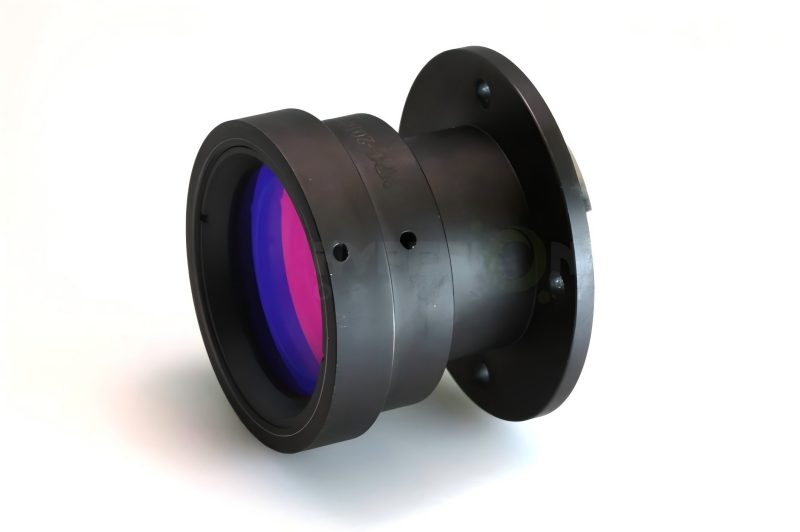
One of the most important aspects of designing a laser collimator lens is achieving the correct balance between focal length, aperture size, and laser wavelength. These parameters directly affect beam expansion, divergence control, and overall optical efficiency.
Focal length determines how the lens interacts with the laser source and influences the final beam characteristics. A suitable focal length allows the lens to effectively convert divergent light into a more parallel beam. If the focal length is not properly matched, the resulting beam may experience excessive divergence or unwanted focusing effects.
The aperture of a laser collimating lens also plays an important role in beam quality. A larger optical aperture can accommodate larger beams and reduce potential clipping losses, while a compact aperture may be more suitable for smaller laser modules where space efficiency is important.
Wavelength compatibility is another essential design consideration. Optical materials have different transmission characteristics depending on wavelength, meaning that a lens optimized for one laser wavelength may not perform equally well at another. Engineers must select suitable materials and coatings to ensure efficient transmission and stable performance.
| Design Factor | Influence on Laser Performance | Key Consideration |
|---|---|---|
| Focal Length | Determines beam expansion and collimation effectiveness | Must match the laser source characteristics and required beam profile |
| Aperture Size | Affects beam acceptance and optical efficiency | Should accommodate beam diameter while maintaining compact design goals |
| Wavelength Compatibility | Influences transmission efficiency and optical stability | Requires suitable optical materials and coatings |
| Alignment Accuracy | Impacts beam direction and long-term stability | Requires precision assembly and mechanical control |
When these parameters are carefully matched, a laser collimator lens can provide stable beam control and improve the overall reliability of laser-based systems.
The materials used in a laser collimating lens directly influence optical performance. Different optical glasses and materials provide different levels of transmission, thermal stability, and wavelength compatibility. Choosing the appropriate material ensures that the lens can maintain performance under specific operating conditions.
For laser applications, optical transmission efficiency is especially important because even small losses can affect system output and accuracy. High-quality optical coatings help reduce reflection at lens surfaces, allowing more laser energy to pass through the system.
Anti-reflection coatings are commonly applied to improve light transmission and reduce unwanted optical effects. These coatings are designed according to the operating wavelength range of the laser system, ensuring that the laser collimator lens achieves efficient beam transmission.
Material selection also affects durability. In environments with temperature changes, vibration, or continuous operation, optical components must maintain stable characteristics over time. Proper material and coating choices help extend service life and improve system reliability.
Beam divergence control is one of the primary functions of a laser collimating lens. Although laser light is highly directional, real laser sources still produce some degree of divergence. Without proper optical control, the beam may expand over distance and reduce system accuracy.
Accurate alignment between the laser source and the lens is essential for achieving consistent collimation performance. Even small positioning errors can change the beam direction, create uneven intensity distribution, or reduce focusing accuracy.
Precision assembly processes ensure that optical elements remain correctly positioned within the lens structure. Mechanical tolerances, lens mounting methods, and environmental stability all contribute to the final performance of the laser collimator lens.
For applications requiring precise beam control, such as measurement equipment, optical sensors, and scientific instruments, stable alignment is critical. A carefully manufactured collimation system helps maintain predictable beam characteristics throughout operation.
A laser collimator lens is rarely used as an isolated component. In many applications, it must be integrated into a larger optical system that includes laser sources, sensors, detectors, mechanical structures, and control electronics.
Successful integration requires consideration of physical dimensions, mounting requirements, thermal conditions, and optical compatibility. The lens must fit within the system architecture while maintaining the required beam quality.
Engineers also need to consider factors such as working distance, environmental conditions, and maintenance requirements. A suitable laser collimating lens should provide reliable performance while supporting the overall goals of the optical system.
Selecting appropriate optical components is an important step in system integration. Hypoptics provides precision optical solutions designed for different imaging and laser-related applications. Engineers looking for suitable optical elements and related solutions can explore the available Hypoptics optical components to better understand possible options for their projects.
Continuous optimization of laser collimator lens design helps improve the performance of modern laser systems. Advanced optical analysis, precision manufacturing, and improved materials allow engineers to create lenses with better stability, efficiency, and compatibility.
Optimization does not only focus on optical performance but also considers practical requirements such as compact structure, reliability, and integration flexibility. A well-optimized laser collimating lens can help reduce beam variation, improve measurement accuracy, and enhance the consistency of laser-based equipment.
For professional optical applications, selecting the correct lens design requires understanding both technical requirements and application conditions. Hypoptics supports customers in evaluating optical solutions based on different system requirements. When additional technical discussion is needed, engineers and businesses can connect through the Hypoptics contact page to discuss specific optical requirements.
The performance of a laser system depends heavily on the precision of its optical design. A carefully engineered laser collimating lens provides essential beam control by reducing divergence, improving transmission efficiency, and maintaining stable optical performance.
From selecting suitable focal lengths and apertures to optimizing materials, coatings, and assembly accuracy, every decision influences the final capability of a laser collimator lens. As laser applications continue to expand across industries, advanced collimation technology remains essential for achieving accurate and reliable beam control.
Through precision optical engineering and application-focused design, Hypoptics continues to support the development of optical solutions that meet the requirements of modern laser systems. Choosing the right laser collimating lens can help improve system stability, efficiency, and long-term performance.
A laser collimating lens is an optical component designed to reduce laser beam divergence and create a more parallel light beam for precise applications.
Both terms describe optical components used for laser beam collimation. The difference is mainly in terminology, with both referring to lenses that control laser beam direction and divergence.
Focal length determines how effectively the lens converts divergent laser output into a controlled and stable beam.
Optical coatings reduce surface reflections and improve light transmission efficiency for specific laser wavelengths.
Incorrect alignment can change beam direction, increase divergence, and reduce the accuracy of the laser system.
Important factors include laser wavelength, beam size, focal length, aperture requirements, operating environment, and system integration needs.




 Call us on:
  Email us:
  9B-4F, No.1 Qingnian Road Liando U Valley,Yuhua International Wisdom Valley, Nanjing, 210039 China