 English
  cn
cn  de
de  es
es  fr
fr 
As optical systems continue to become smaller, lighter, and more intelligent, traditional optical designs are facing increasing challenges in balancing performance, size, and integration efficiency. Many modern applications require optical components that can deliver reliable light transmission and imaging performance while fitting into highly compact structures. This demand has accelerated the development of advanced optical solutions, with rod lens technology emerging as an important approach for next-generation compact optical systems.
Unlike conventional spherical lenses that primarily focus on imaging through curved surfaces, a rod lens uses a cylindrical optical structure to guide, transmit, and distribute light in unique ways. This design enables efficient light management in applications where space limitations and optical precision are critical. Combined with advanced rod optics principles, rod lenses provide engineers with new possibilities for designing smaller and more efficient optical architectures.
From medical imaging devices and barcode scanners to machine vision systems and illumination modules, rod lens technology has become increasingly valuable across industries that require compact yet high-performance optical solutions. Hypoptics focuses on developing precision optical technologies that support demanding applications where optical reliability and miniaturized design are essential.
The biggest advantage of a rod lens lies in its ability to achieve effective light transmission within a very compact form factor. Traditional optical systems often require multiple lenses and complex mechanical structures to achieve similar optical functions, which increases system size and manufacturing complexity. Rod lenses simplify optical paths by using their cylindrical geometry to control how light travels through the system.
A typical rod lens works by transmitting light along its length while maintaining controlled optical behavior across the lens diameter. This characteristic makes it particularly useful in systems where uniform illumination, image transfer, or compact light guidance is required.
The unique structure of rod optics allows designers to create optical assemblies with reduced footprint while maintaining stable performance. For example, compact imaging devices can use rod lenses to transfer images or distribute light efficiently without relying on larger optical assemblies.
As industries continue moving toward portable devices and integrated optical modules, the ability of rod lens technology to combine performance with space efficiency makes it an increasingly important design option. Engineers can achieve more flexible optical layouts while reducing overall system complexity.
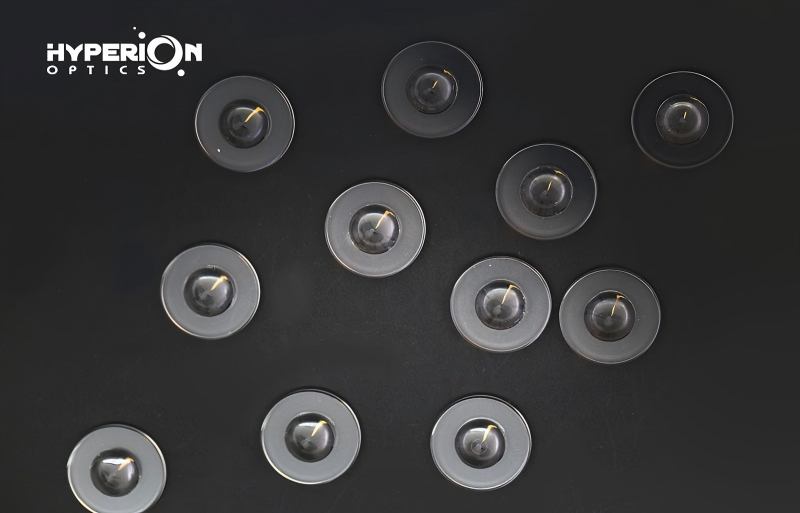
The versatility of a rod lens comes from its unique cylindrical geometry and optical characteristics. Instead of focusing light in the same way as conventional lenses, rod lenses are designed to manage light transmission along one primary direction, creating specific imaging or illumination effects.
One important design principle behind rod optics is the relationship between lens diameter, length, refractive index, and light transmission performance. By carefully controlling these parameters, engineers can optimize how light enters, travels through, and exits the optical element.
Material selection also plays a critical role in rod lens performance. Optical glass types are selected based on factors such as transparency, refractive properties, environmental stability, and application requirements. High-quality materials help ensure that a rod lens maintains consistent optical performance in demanding environments.
Coating technology further improves the capabilities of rod optics. Anti-reflective coatings can increase transmission efficiency by reducing unwanted reflections, allowing more optical energy to pass through the system. This is especially important in precision applications where even small optical losses can affect overall performance.
Because of these flexible design characteristics, rod lenses can be customized for different optical requirements, including imaging, sensing, illumination, and light coupling applications.
Miniaturization has become one of the most important trends in modern optical engineering. From handheld medical devices to automated inspection equipment, manufacturers increasingly need optical components that deliver high performance without increasing system dimensions.
A rod lens supports this trend by providing optical functionality in a compact cylindrical structure. Its small size and efficient light management capabilities make it suitable for applications where installation space is limited.
In medical imaging systems, rod lenses help transfer images through narrow spaces, allowing the development of smaller endoscopic and diagnostic devices. In industrial inspection systems, rod optics support precise illumination and imaging configurations that improve detection accuracy while maintaining compact equipment designs.
The growing adoption of automation and smart sensing technologies has further increased demand for miniature optical components. As optical systems become more integrated, rod lens technology provides engineers with greater flexibility when designing high-precision devices.
Hypoptics provides advanced optical solutions for applications requiring reliable performance and precision manufacturing. Through a wide range of precision optical components, Hypoptics supports engineers in developing optical systems that require accuracy, durability, and efficient light control.
Compared with many conventional optical elements, a rod lens provides unique structural advantages that make it suitable for compact and specialized optical systems. Traditional lenses often require multiple optical surfaces and larger mechanical arrangements to achieve specific functions, while rod lenses can deliver efficient light control through a simpler cylindrical design.
One of the most important advantages of rod optics is their compact geometry. The elongated cylindrical shape allows optical designers to integrate light transmission and image guidance functions into smaller spaces. This is particularly valuable in applications where reducing device size is essential, such as medical instruments, sensors, and miniature imaging modules.
Another advantage is design flexibility. A rod lens can be manufactured with different diameters, lengths, materials, and surface treatments to meet specific optical requirements. This adaptability allows engineers to optimize optical systems according to factors such as working distance, illumination conditions, and detector configuration.
Rod lenses also offer excellent consistency in applications requiring controlled light distribution. Because the cylindrical structure guides light in a predictable manner, rod optics are often used in systems that require uniform illumination, precise image transfer, or efficient optical coupling.
The following table highlights the differences between rod lenses and conventional optical components in compact system design:
| Comparison Factor | Rod Lens | Conventional Optical Components |
|---|---|---|
| Structural Design | Cylindrical optical structure designed for efficient light guidance and compact integration | Usually based on spherical or planar surfaces for general imaging functions |
| Space Efficiency | Suitable for applications requiring minimal installation space | May require larger optical assemblies depending on system requirements |
| Light Management | Provides controlled transmission, image transfer, or illumination performance | Mainly optimized for standard focusing and imaging functions |
| Application Flexibility | Can be adapted for specialized compact optical systems | Commonly used for broader general-purpose optical applications |
| System Integration | Supports miniaturized optical architectures with fewer structural limitations | May require additional optical elements for complex functions |
Although conventional optics remain essential for many imaging applications, rod lens technology provides an alternative approach for engineers seeking improved integration efficiency and compact system performance.
The demand for smaller and smarter optical devices has expanded the use of rod lens technology across multiple industries. Its ability to provide reliable optical performance within limited space makes it valuable for applications where traditional optical designs may not be suitable.
In medical imaging, rod lenses play an important role in compact visualization systems. Their small diameter and efficient image transmission characteristics make them suitable for devices that require optical access through narrow pathways. Applications such as endoscopic imaging and diagnostic equipment benefit from the ability of rod optics to transfer optical information while maintaining a compact structure.
In industrial automation and machine vision, rod lens systems help improve inspection capabilities by supporting efficient illumination and image acquisition. Automated equipment often requires optical modules that can operate reliably in restricted spaces, and rod lenses provide designers with greater freedom when creating integrated inspection solutions.
Consumer electronics and sensing technologies are also creating new opportunities for rod lens applications. As devices become thinner and more multifunctional, optical components must deliver strong performance without increasing product dimensions. The compact nature of a rod lens makes it an attractive option for optical sensing, scanning, and light management systems.
Scientific instruments and laboratory equipment represent another important application area. Precision measurement systems often require stable optical performance and accurate light transmission. Through advanced rod optics design, engineers can achieve reliable optical control while maintaining compact instrument structures.
The continued growth of automation, medical technology, and intelligent sensing will further increase demand for optical solutions that combine precision with miniaturization. Rod lens technology is positioned to support this development by enabling more efficient and flexible optical architectures.
Developing high-performance optical systems requires more than selecting individual components. Optical designers must consider material properties, manufacturing accuracy, surface quality, coating performance, and system compatibility. These factors determine whether an optical component can deliver stable performance in real-world applications.
Hypoptics focuses on precision optical engineering and supports advanced applications that require reliable optical components. With expertise in optical design and manufacturing, Hypoptics helps customers evaluate suitable solutions for demanding applications involving imaging, sensing, and light management.
A successful rod lens solution depends on matching optical characteristics with the requirements of the final system. Factors such as wavelength range, mechanical dimensions, transmission performance, and environmental conditions must all be considered during the design process.
For projects requiring professional guidance on optical selection, system requirements, or application-specific solutions, engineers can discuss their optical requirements with Hypoptics specialists and explore suitable approaches for their designs.
Rod lens technology is opening new possibilities for compact optical system design by providing efficient light management, flexible integration options, and reliable performance in space-limited applications. Through unique cylindrical structures and advanced optical engineering, rod lens solutions help designers overcome challenges associated with traditional optical architectures.
From medical imaging and machine vision to scientific instruments and intelligent sensing systems, rod optics continue to support the development of smaller, smarter, and more efficient optical devices. As industries increasingly demand miniaturized high-precision solutions, rod lens technology will remain an important component in the future of optical innovation.
By combining optical expertise, precision manufacturing capabilities, and application-focused design support, Hypoptics continues to help engineers develop advanced optical systems that achieve both compact integration and dependable performance.
A rod lens is a cylindrical optical component designed to transmit, guide, or distribute light efficiently in compact optical systems. It is commonly used in imaging, illumination, and sensing applications.
Unlike traditional spherical lenses, rod lenses use a cylindrical structure that provides unique light guidance characteristics and allows easier integration into compact optical designs.
Rod optics are used in applications such as medical imaging devices, machine vision systems, scanning equipment, illumination modules, and precision optical instruments.
Rod lenses provide effective optical performance in a small cylindrical form factor, making them suitable for devices where installation space and weight are limited.
Rod lens performance depends on factors including optical material selection, dimensions, surface quality, coatings, wavelength requirements, and system design compatibility.
Engineers should consider application requirements such as optical function, operating wavelength, space limitations, and performance targets when selecting a rod lens. Professional optical consultation can help identify the most suitable solution.





 Call us on:
  Email us:
  9B-4F, No.1 Qingnian Road Liando U Valley,Yuhua International Wisdom Valley, Nanjing, 210039 China