 English
  cn
cn  de
de  es
es  fr
fr 
The difference between an ordinary image and a reliable optical measurement often comes down to how precisely a lens controls light. As cameras become essential components in automated inspection, scientific analysis, and advanced imaging systems, the ability to preserve accurate object geometry has become just as important as achieving high resolution.
Traditional spherical optics can introduce unavoidable compromises when handling light rays from different areas of the lens surface. An aspherical camera lens overcomes these limitations by using specially calculated surface profiles that provide more precise control over optical paths. With an advanced aspheric lens design, engineers can reduce distortion, improve edge-to-edge clarity, and create imaging systems that deliver more accurate visual information.
Designing a high-performance aspherical camera lens is a process that combines optical simulation, material engineering, and manufacturing precision. Each surface profile must be carefully optimized to achieve the intended imaging performance in real-world conditions. At Hypoptics, optical expertise and precision manufacturing capabilities are integrated to develop customized lens solutions for demanding imaging applications.
The foundation of an aspherical camera lens lies in its unique surface geometry. Unlike conventional spherical lenses that maintain the same curvature across the entire surface, an aspherical lens uses a continuously changing curvature profile. This allows optical engineers to control how light rays travel through different areas of the lens and achieve more accurate image formation.
In a traditional spherical lens, light rays passing through the center and edges of the lens may not converge at the same point. This difference can create optical errors such as spherical aberration and geometric distortion. By introducing a carefully calculated aspherical surface, engineers can compensate for these variations and improve the accuracy of the final image.
A well-developed aspheric lens design enables the lens surface to perform optical correction directly rather than relying only on additional lens elements or software-based image processing. This approach is especially valuable for compact imaging systems where maintaining high performance while reducing size and complexity is important.
For wide-angle cameras and high-resolution imaging devices, distortion control is a critical requirement. An optimized aspherical camera lens helps maintain the true shape and position of objects within the image, making it suitable for applications where visual accuracy directly affects system performance.
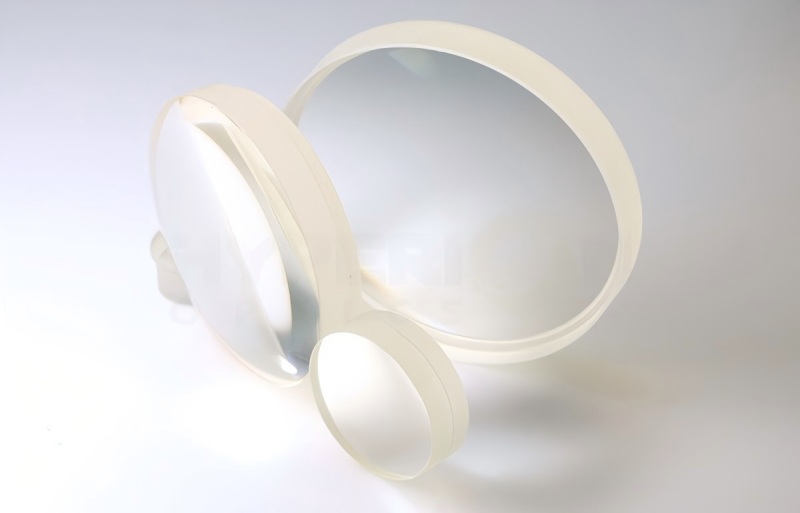
Developing an effective aspheric lens design requires careful optimization of multiple optical parameters. The aspherical surface itself is only one part of the complete lens system. Engineers must evaluate the relationship between focal length, aperture, field angle, lens materials, and element arrangement to achieve the required imaging performance.
During the optical design process, simulation software is used to analyze how light behaves throughout the lens structure. Engineers can adjust surface profiles and optical configurations before manufacturing begins, reducing development risks and improving the probability of achieving the desired performance.
| Optical Design Element | Influence on Imaging Performance | Contribution of Aspherical Lens Design |
|---|---|---|
| Surface curvature profile | Determines how incoming light rays are redirected | Improves distortion correction and optical accuracy |
| Focal length | Controls magnification and viewing angle | Allows optimization for specific imaging applications |
| Aperture configuration | Affects brightness, depth of field, and resolution | Balances light collection with image clarity |
| Lens element arrangement | Influences aberration control and system size | Supports compact designs with improved performance |
| Field angle | Affects edge image quality | Helps maintain consistent resolution across the image field |
A successful aspheric lens design is not based on maximizing a single specification. Instead, it focuses on achieving a balanced optical system that delivers stable performance under practical operating conditions.
High-resolution imaging systems often face challenges caused by optical aberrations. While a conventional lens may produce acceptable image quality at the center, performance can decrease toward the edges due to differences in light focusing and image projection.
An aspherical camera lens improves this situation by precisely controlling light behavior across the entire optical surface. The customized curvature of the lens allows engineers to reduce unwanted variations between central and peripheral light rays, resulting in more uniform image quality.
This improvement is particularly important for machine vision systems, where cameras must accurately detect product defects, measure components, or guide automated processes. In these environments, edge distortion or inconsistent sharpness can directly influence inspection accuracy.
Through advanced aspheric lens design, optical engineers can reduce several common aberrations, including spherical aberration, field curvature, and distortion. This creates a more reliable optical foundation before digital correction technologies are applied.
The performance of an aspherical camera lens depends not only on optical calculations but also on the accuracy with which the lens is manufactured. Because aspherical surfaces contain complex curvature variations, even small deviations from the designed profile may affect image quality.
Precision manufacturing processes are required to reproduce the intended surface geometry and maintain consistent optical performance. Advanced polishing technologies, accurate surface measurement, and strict quality inspection all play important roles in ensuring that the final lens matches the original aspheric lens design.
This connection between design and manufacturing capability is especially important for customized optical systems. A theoretically optimized lens cannot deliver its expected performance without reliable production control.
Hypoptics combines optical engineering experience with precision manufacturing capabilities to develop customized optical components for different imaging requirements. Its range of optical solutions can be explored through the Hypoptics optical components page, where different lens and optical technologies are introduced for industrial and specialized applications.
Although surface geometry determines how an aspherical camera lens controls light, optical materials and coatings also influence the final imaging performance. Selecting suitable materials allows engineers to balance refractive properties, transmission efficiency, thermal stability, and application requirements.
Different imaging environments may require different optical characteristics. For example, systems operating across specific wavelength ranges or under changing temperatures may require carefully selected glass materials to maintain stable performance. These decisions are an essential part of professional aspheric lens design.
Optical coatings provide another layer of performance improvement by reducing reflections between lens surfaces. Anti-reflection coatings help increase light transmission, improve contrast, and reduce unwanted optical effects such as flare and ghosting.
| Performance Aspect | Traditional Spherical Lens | Aspherical Camera Lens |
|---|---|---|
| Surface structure | Uses fixed spherical curvature | Uses customized non-spherical curvature |
| Distortion correction | Usually requires additional compensation | Achieves correction through optical surface optimization |
| Aberration control | May require multiple optical elements | Improves correction efficiency through aspherical geometry |
| System design | Can require larger optical assemblies | Supports compact and efficient optical solutions |
As imaging technology continues to advance, industries increasingly require lenses that provide both high resolution and accurate image reproduction. An aspherical camera lens is particularly suitable for applications where distortion can affect measurement accuracy, recognition results, or system reliability.
In industrial machine vision, these lenses help cameras capture accurate images for automated inspection and quality control. In medical imaging systems, they support clearer visualization and more reliable analysis. They are also widely considered for scientific instruments, aerospace imaging equipment, and advanced surveillance systems that require consistent optical performance.
For developers building specialized imaging platforms, choosing the right aspheric lens design at an early stage can improve overall system efficiency and reduce the need for complex post-processing. Hypoptics works with customers to evaluate optical requirements and develop suitable solutions, with further technical discussions available through the Hypoptics contact page.
An aspherical camera lens achieves low-distortion imaging performance through the combination of advanced surface geometry, optimized optical parameters, precise manufacturing, and carefully selected materials. Unlike conventional spherical optics, it provides engineers with greater control over light behavior and enables more accurate image reproduction.
As industries continue to demand higher imaging accuracy and more compact optical systems, aspheric lens design has become an important approach for developing advanced camera solutions. Through professional optical engineering and customized manufacturing capabilities, Hypoptics helps customers create reliable optical systems for applications where image quality and precision are critical.
An aspherical camera lens uses specially designed non-spherical surfaces to control light more accurately, reducing distortion and improving image consistency compared with traditional spherical lenses.
An optimized aspheric lens design adjusts surface curvature to control light paths, reduce optical aberrations, and maintain sharper images across the entire field of view.
Yes. They are commonly used in wide-angle imaging because they help reduce edge distortion and maintain more accurate object representation.
Aspherical surfaces require highly accurate fabrication. Small manufacturing errors can affect distortion correction and reduce optical performance.
Yes. Optical coatings improve transmission efficiency and reduce reflections, helping achieve clearer and higher-contrast images.
Industrial inspection, medical imaging, aerospace, surveillance, and scientific research commonly use aspherical camera lenses for precision imaging.




 Call us on:
  Email us:
  9B-4F, No.1 Qingnian Road Liando U Valley,Yuhua International Wisdom Valley, Nanjing, 210039 China