 English
  cn
cn  de
de  es
es  fr
fr 
Modern imaging systems increasingly require wider fields of view, higher resolution, and more flexible visual coverage. From industrial inspection and security monitoring to robotics and immersive imaging, traditional optical designs often face limitations when capturing large scenes within restricted spaces. This demand has driven the development of advanced Fisheye Lenses, which provide ultra-wide-angle imaging capabilities while maintaining valuable image information across a broad viewing area.
However, producing high-performance Fisheye Lenses is far more complex than simply creating a lens with an extremely wide field of view. The unique curved optical structure introduces significant challenges in distortion management, optical alignment, material selection, and production accuracy. To achieve reliable imaging performance, advanced optical design must be combined with precise optics manufacturing capabilities.
As a professional optical technology provider, Hypoptics focuses on developing precision optical solutions that support demanding imaging applications. Through advanced engineering and manufacturing expertise, Hypoptics helps customers achieve high-quality optical performance for specialized imaging systems.
The core challenge of designing high-performance Fisheye Lenses is balancing an extremely wide field of view with image quality. Unlike standard lenses that typically capture narrower perspectives with minimal distortion, fisheye designs intentionally create a much wider viewing angle, often exceeding 180 degrees in specialized applications.
This wide-angle capability requires careful control of optical distortion. Although fisheye distortion can be useful for applications such as panoramic imaging and environmental monitoring, uncontrolled distortion may reduce measurement accuracy and affect image interpretation. Optical designers must carefully optimize lens geometry, element arrangement, and ray transmission paths to achieve the desired imaging characteristics.
Another challenge is maintaining image clarity from the center of the image to the edges. Wide-angle optical systems naturally experience differences in light behavior across the image plane, which can lead to reduced sharpness or uneven illumination. Advanced optical simulation and precise design methods are essential for ensuring consistent performance throughout the entire field of view.
The complexity of these requirements demonstrates why professional optics manufacturing plays an important role in transforming optical designs into reliable products. Even a well-designed fisheye optical system requires accurate production processes to achieve its intended performance.
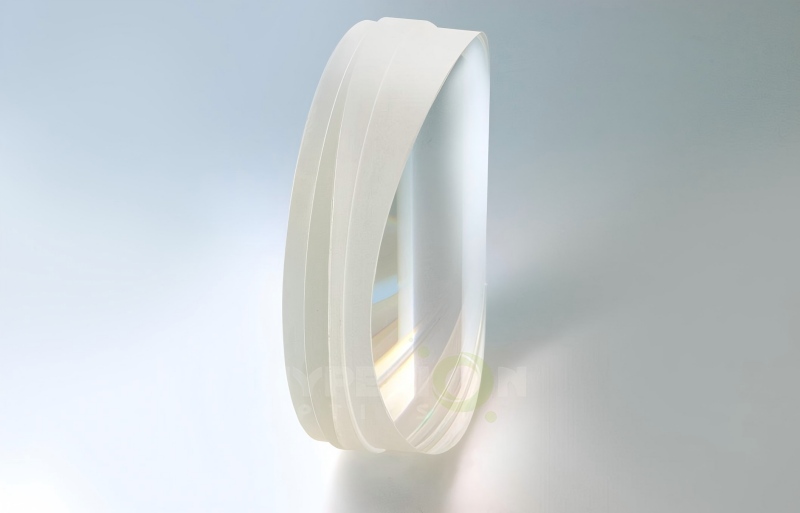
Optical design provides the foundation for a fisheye lens, but manufacturing accuracy determines whether that design can achieve real-world performance. Small variations in lens dimensions, surface quality, or assembly alignment can significantly influence image quality, especially in wide-angle optical systems.
High-quality Fisheye Lenses require strict control over multiple manufacturing factors, including lens curvature accuracy, surface polishing precision, optical centering, and assembly consistency. These elements directly affect focusing accuracy, distortion control, and overall image reliability.
Advanced optics manufacturing combines precision machining, optical polishing, coating technology, and quality inspection methods to maintain consistent optical performance. During production, manufacturers must ensure that each optical element meets strict specifications before being integrated into the final lens assembly.
For example, improper alignment between optical elements may introduce additional aberrations, reducing image sharpness and increasing unwanted distortion. Precision manufacturing processes help minimize these issues by maintaining accurate positioning and mechanical stability.
Hypoptics supports advanced optical applications by providing carefully engineered precision optical components designed for demanding imaging requirements. By combining optical expertise with manufacturing capabilities, Hypoptics helps customers develop reliable solutions for complex optical systems.
Material selection is another critical factor influencing the performance of Fisheye Lenses. Different optical materials provide different levels of transmission, refractive performance, thermal stability, and durability. Choosing the appropriate materials allows engineers to improve image quality while maintaining long-term reliability.
Advanced fisheye optical systems often use carefully selected optical glass materials to control aberrations and maintain consistent performance across wide viewing angles. The refractive characteristics of each material influence how light travels through the lens system, making material selection an essential part of optical design.
Optical coatings further enhance fisheye lens performance. Because wide-angle systems contain multiple optical surfaces, reflections between elements can reduce light transmission and create unwanted artifacts. Anti-reflective coatings help minimize these effects by improving transmission efficiency and reducing flare.
In professional imaging environments, coating durability is equally important. Fisheye lenses used in industrial or outdoor applications may face temperature changes, humidity, dust, and mechanical stress. Reliable coating technologies help maintain optical performance under challenging operating conditions.
Through advanced materials and coating processes, modern optics manufacturing enables fisheye lens systems to achieve higher clarity, improved contrast, and greater operational stability.
For Fisheye Lenses, distortion is both a defining characteristic and a technical challenge. While fisheye designs intentionally create a wide field of view by using controlled optical distortion, excessive or inconsistent distortion can negatively affect image interpretation, measurement accuracy, and system performance.
Manufacturing accuracy directly influences how effectively distortion can be controlled. Small deviations in lens curvature, element positioning, or optical alignment may cause unexpected image deformation, uneven sharpness, or reduced optical consistency. This is why advanced optics manufacturing processes are essential for producing reliable fisheye imaging solutions.
Precision manufacturing involves controlling every stage of production, from optical element fabrication and polishing to assembly and final inspection. High-precision equipment and strict quality control procedures help ensure that each optical surface matches the intended design parameters.
In addition to distortion control, manufacturing accuracy affects other important imaging characteristics, including resolution, contrast, edge performance, and illumination uniformity. A well-manufactured fisheye lens can maintain better image quality across the entire viewing range, allowing users to capture more detailed and reliable visual information.
The relationship between optical design and production capability is especially important for specialized applications. A theoretically advanced design cannot deliver expected results without accurate manufacturing execution. Therefore, professional optics manufacturing is a key factor in achieving consistent performance for high-precision Fisheye Lenses.
The unique wide-angle characteristics of Fisheye Lenses have created new opportunities across many modern imaging applications. Their ability to capture large scenes with fewer optical limitations makes them valuable in environments where broad visual coverage is required.
In security and surveillance systems, fisheye lenses enable wide-area monitoring with fewer cameras. Their panoramic imaging capability allows operators to observe larger spaces while maintaining efficient system layouts. Advanced optical design helps balance wide coverage with image clarity, ensuring that important details remain visible.
In industrial inspection and machine vision, fisheye lenses support applications where understanding the complete environment is essential. Automated systems, robotics, and smart manufacturing equipment often require compact imaging solutions that can capture complex scenes from limited installation positions.
Automotive and intelligent transportation systems also benefit from wide-angle optical technologies. Fisheye imaging solutions can support driver assistance systems, parking cameras, and environmental perception technologies by providing broader visual information around vehicles.
Scientific imaging, virtual reality, and immersive technologies represent additional areas where Fisheye Lenses create value. Their ability to capture expansive scenes makes them suitable for applications requiring panoramic views and realistic visual experiences.
As these applications continue evolving, demand for advanced optical solutions will continue to increase. High-quality optics manufacturing ensures that fisheye lens systems can meet the requirements of industries that depend on precision, reliability, and long-term performance.
| Comparison Factor | Fisheye Lenses | Conventional Wide-Angle Lenses |
|---|---|---|
| Field of View | Designed for extremely wide viewing angles, often exceeding 180 degrees in specialized designs | Provides wide coverage but usually with a more limited perspective |
| Distortion Characteristics | Uses controlled distortion as part of the optical design approach | Generally focuses on minimizing distortion for natural-looking images |
| Optical Design Complexity | Requires advanced optical engineering and precise manufacturing control | Usually involves simpler optical structures |
| Main Applications | Panoramic imaging, surveillance, robotics, immersive imaging, machine vision | General photography, standard imaging, everyday wide-angle applications |
| Manufacturing Requirements | Requires high-precision optics manufacturing for consistent performance | Requires precision manufacturing but typically with fewer distortion-control challenges |
Developing advanced Fisheye Lenses requires a combination of optical design expertise, manufacturing capability, and quality control experience. Each stage of development influences the final imaging performance, from the initial optical structure design to the precision production process.
Hypoptics focuses on providing professional optical solutions for applications that require high accuracy and reliable performance. By combining optical engineering knowledge with advanced optics manufacturing capabilities, Hypoptics supports customers in developing imaging systems that meet demanding technical requirements.
A successful fisheye lens solution requires careful consideration of factors such as field of view, distortion characteristics, optical materials, coating performance, and application environment. Hypoptics works with customers to understand these requirements and provide suitable optical approaches for different imaging challenges.
For projects involving specialized imaging systems or advanced optical requirements, customers can consult with Hypoptics optical specialists to discuss application needs and explore suitable high-precision lens solutions.
High-quality Fisheye Lenses depend on much more than wide-angle optical design. Achieving reliable performance requires a combination of advanced optical engineering, accurate material selection, precise coating technology, and professional optics manufacturing capabilities.
From distortion control and image clarity to application-specific performance, every stage of development influences the final quality of a fisheye imaging system. As industries continue demanding broader visual coverage and more compact imaging solutions, advanced fisheye lens technology will remain an important part of modern optical innovation.
With expertise in optical design and precision manufacturing, Hypoptics helps engineers and organizations develop reliable optical solutions for challenging imaging environments. Through continuous improvement in optical technologies and manufacturing processes, high-performance fisheye lenses will continue supporting the future of intelligent imaging systems.
Fisheye Lenses are used for applications requiring extremely wide fields of view, including surveillance, robotics, machine vision, panoramic imaging, automotive systems, and immersive technologies.
Fisheye lenses create controlled distortion to achieve very wide viewing angles. This distortion is part of the optical design and can be managed through advanced engineering and image processing.
Optics manufacturing affects lens performance through control of surface accuracy, alignment, polishing quality, coatings, and assembly precision, which directly influence image quality and reliability.
High-performance fisheye lenses typically use specialized optical glass materials selected for their transmission characteristics, refractive properties, durability, and stability.
Yes. Fisheye lenses are widely used in industrial inspection, machine vision, and automation systems where broad visual coverage and compact optical designs are required.
Selecting the right fisheye lens depends on factors such as field of view, resolution requirements, operating environment, sensor compatibility, and application goals. Professional optical consultation can help determine the most suitable solution.




 Call us on:
  Email us:
  9B-4F, No.1 Qingnian Road Liando U Valley,Yuhua International Wisdom Valley, Nanjing, 210039 China